Utqiagvik, United States
No cruise ships are scheduled in Utqiagvik today, Thursday 12 November 2026. The next is MS Roald Amundsen on Wednesday 11 August 2027. Over the next 12 months, 2 calls bring about 1,100 passengers.
Ship schedule
Next 2 calls · all times local (Alaska Time)

Showing all 2 upcoming calls
Cruise Ships in Utqiagvik
Today and the next 7 days · all times local (Alaska Time)
Next 7 days
- Thu12 Nov–No ships0 ships
- Fri13 Nov–No ships0 ships
- Sat14 Nov–No ships0 ships
- Sun15 Nov–No ships0 ships
- Mon16 Nov–No ships0 ships
- Tue17 Nov–No ships0 ships
- Wed18 Nov–No ships0 ships
Thousands of people in port, guests plus crew. Crowd level compared with a typical Utqiagvik day.
Planning a day in Utqiagvik?
The crowd calendar shows every ship and how busy the port is, hour by hour, plus the quietest and busiest days for the next 90 days.
About Utqiagvik
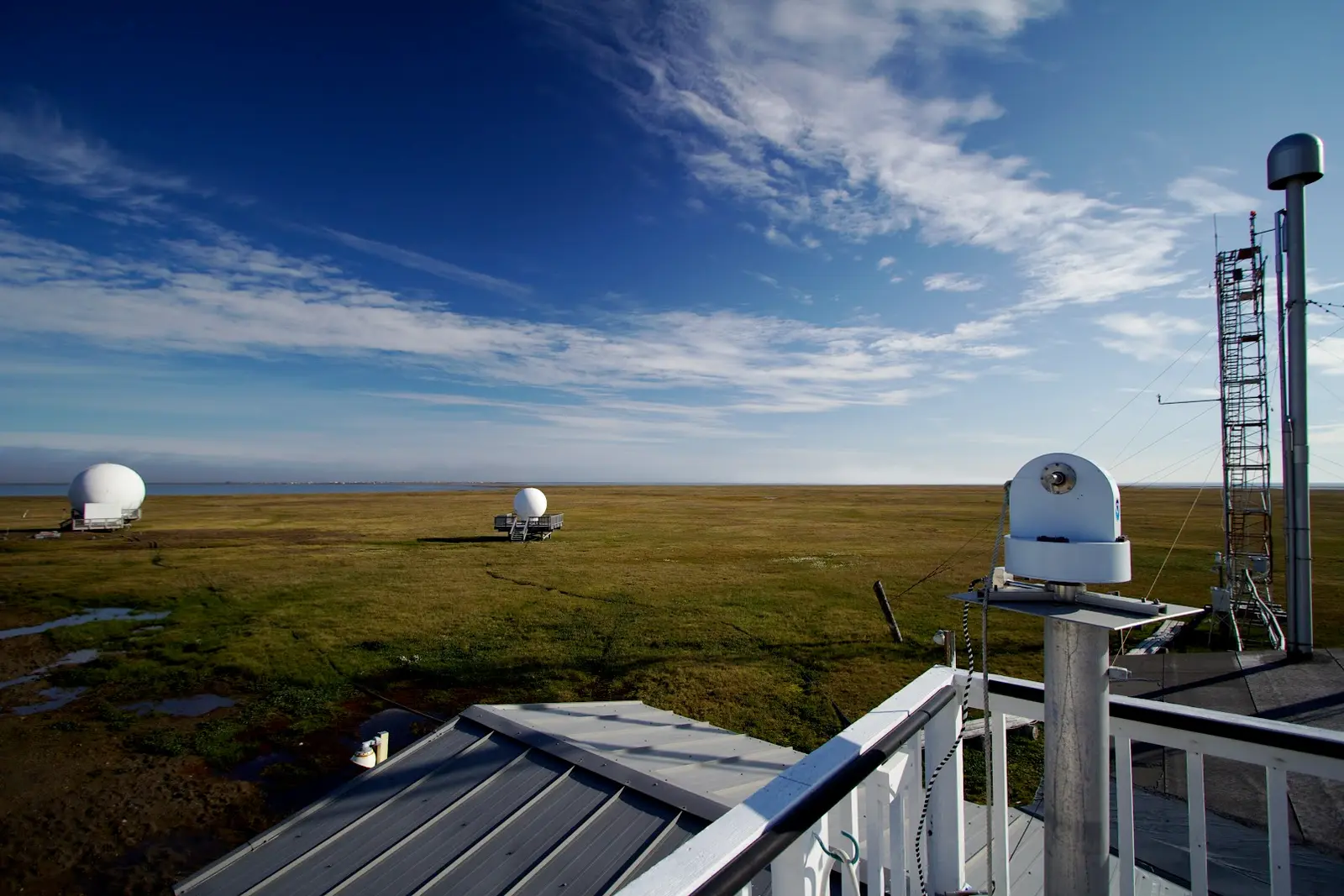
Utqiagvik, long known as Barrow, sits on flat Arctic tundra beside the Chukchi Sea, a short way southwest of Point Barrow, and is often described as the northernmost town in the United States. Its Inupiat name, Ukpeagvik, means 'place where snowy owls are hunted', and most of its roughly 4,600 people are Inupiat.
The town is the main centre of Alaska's North Slope, and bowhead whaling is still at the heart of local life. Visitors can walk to the whale bone arch on the beach near the old Cape Smythe Whaling and Trading Station, learn about Inupiat life and the 19th-century whaling era at the Inupiat Heritage Center, and see carved and painted whalebone art.
Grey and bowhead whales are often seen offshore. Expedition ships call only rarely, in the short late-summer season.
- Climate
- A cold, dry Arctic climate. Long-term averages for Utqiagvik airport give about 2 C (36 F) in June, 5 C (42 F) in July and 4 C (40 F) in August, falling to about 1 C (34 F) in September. October averages about -6 C (21 F) and November about -15 C (6 F). Winter is long and very cold, averaging about -21 to -24 C (-6 to -12 F) from December to March, with April near -16 C (4 F) and May near -5 C (23 F). Precipitation is only about 140 mm (5.4 in) a year. July and August are the wettest months, with about 25 to 28 mm each, while December to April bring about 4 to 6 mm a month, mostly as snow. All figures are approximate.
- Time zone
- Alaska Time
- Currency
- US Dollar (USD)