Marine Port Kagoshima
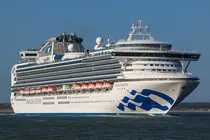
Main cruise berth on a reclaimed island in the Chuo-ko district, with a terminal building and taxi rank; it handles most cruise calls, including the largest ships. Shuttle availability depends on the ship.
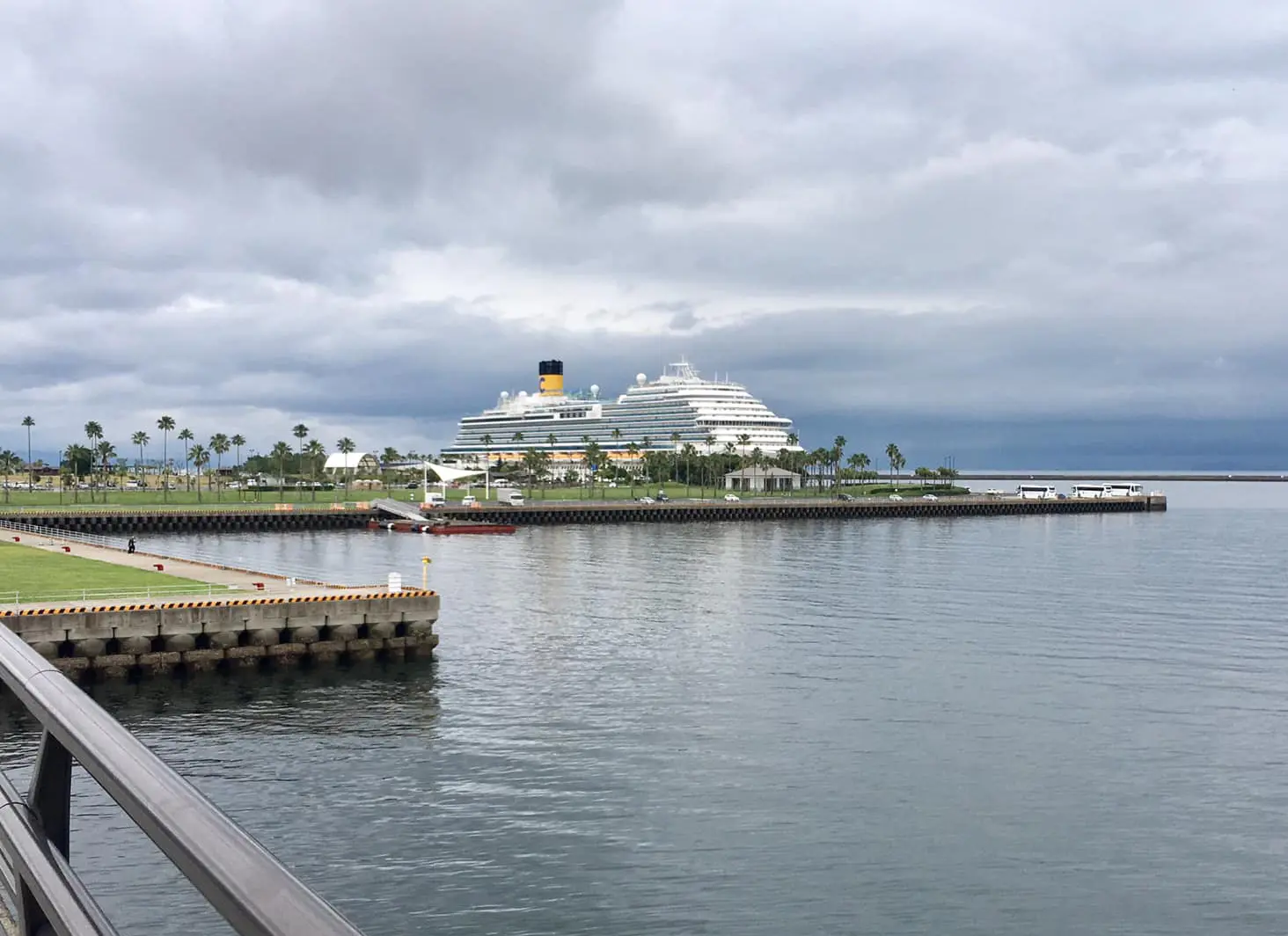
No cruise ships are scheduled in Kagoshima today, Monday 16 November 2026. The next is Star Navigator on Tuesday 17 November. Over the next 12 months, 116 calls bring about 220,000 passengers; the busiest day is Saturday 15 May 2027, with 2 ships.
Next 10 calls · all times local (Japan Standard Time)
Showing 10 of the next 50 calls
Today and the next 7 days · all times local (Japan Standard Time)
Thousands of people in port, guests plus crew. Crowd level compared with a typical Kagoshima day.
The crowd calendar shows every ship and how busy the port is, hour by hour, plus the quietest and busiest days for the next 90 days.
7–8 km · ~20 min by car
Most passengers use the cruise-line shuttle when one runs, or a taxi from the rank in front of the terminal.
Typical prices, approximate. Fares change with demand, traffic and time of day.
Typical prices, approximate. Fares change with demand, traffic and time of day.
Kagoshima City View loop bus (JPY 230 per ride; one-day pass JPY 700, which also covers trams) links Tenmonkan and Kagoshima-Chuo Station with Sengan-en and Shiroyama.
2 terminals
Main cruise berth on a reclaimed island in the Chuo-ko district, with a terminal building and taxi rank; it handles most cruise calls, including the largest ships. Shuttle availability depends on the ship.
Downtown berth in the Honko harbor for smaller ships (about 60,000-ton class), shared with Amami-route ferries; walkable to the Sakurajima ferry and Tenmonkan.
Prices are approximate, in JPY. Coffee and soft drinks are from a Tenmonkan cafe. Breakfast is a set breakfast; lunch ranges from ramen (about ¥900) to a tonkatsu set meal; dinner is kurobuta pork shabu-shabu, per person; water is about ¥90 for 500 ml from a vending machine; street food is a shirokuma shaved ice.
Covered central shopping district with kurobuta tonkatsu, Kagoshima ramen and the original shirokuma shaved-ice shop, Tenmonkan Mujyaki.
Station mall area served by the port shuttle, with restaurants including a Mujyaki branch.
Kagoshima is the capital of Kagoshima Prefecture at the southern tip of Kyushu. It sits on Kinko Bay facing Sakurajima, an active volcano a 15-minute ferry ride from the city that often puffs ash. The city was the seat of the Shimadzu lords of the Satsuma domain and played a central role in Japan's Meiji Restoration; sites linked to Saigo Takamori and the Shimadzu villa garden of Sengan-en recall that history.
Tenmonkan, the covered shopping and dining district, is southern Kyushu's busiest entertainment area. Local specialties include Kagoshima kurobuta black pork, Kagoshima ramen, satsuma-age fish cakes, shochu and the shirokuma shaved-ice dessert.
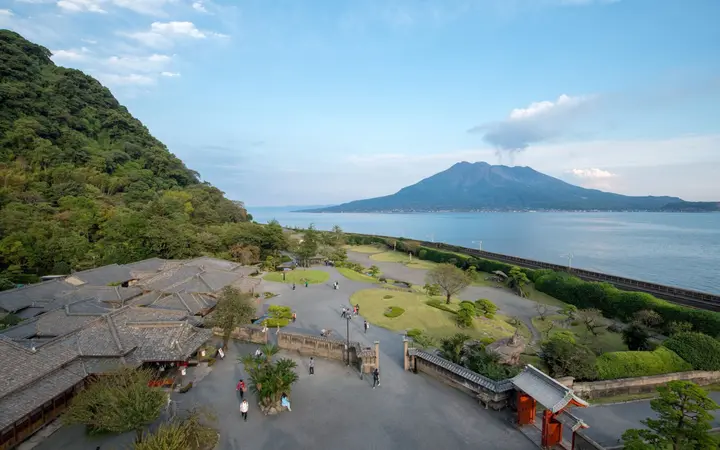
The Shimadzu lords' bayside villa garden 'borrows' Sakurajima as its backdrop; admission (JPY 1,600 adults) includes the palace and the Shoko Shuseikan museum. About 11 km and 25–30 minutes by car from Marine Port; also on the City View bus.
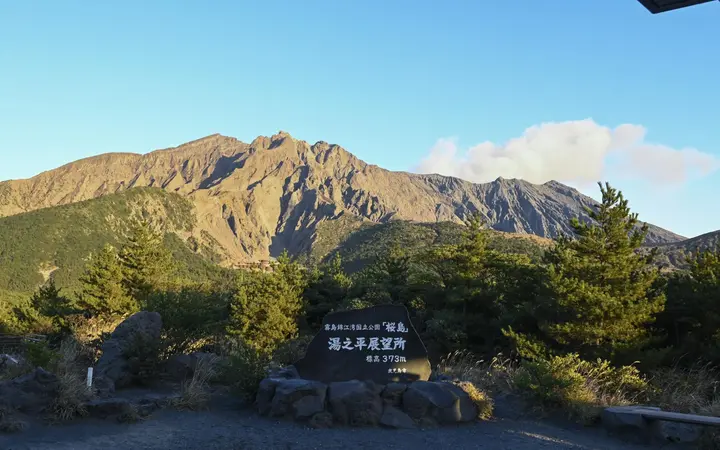
A 15-minute ferry ride (JPY 250 adults) crosses to the active volcano. Yunohira Observatory, at 373 m the highest point open to the public, is about 40 minutes from the ferry port on the Sakurajima Island View bus.
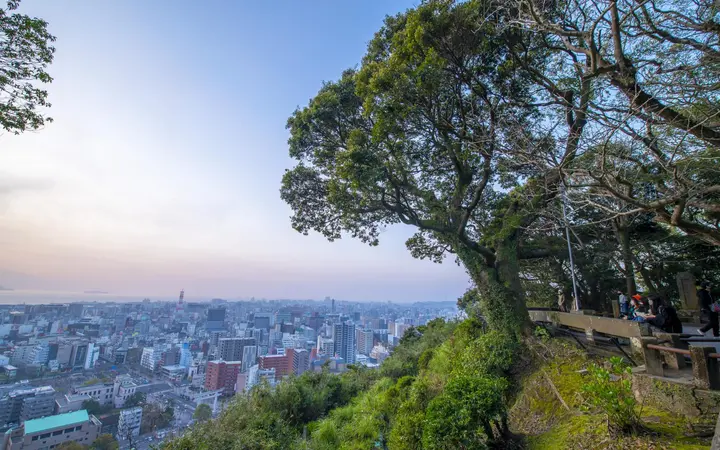
A hilltop park and observatory above the city center with a classic view of Kagoshima, Kinko Bay and Sakurajima, reached by bus or taxi, or by walking trails from near Tenmonkan.
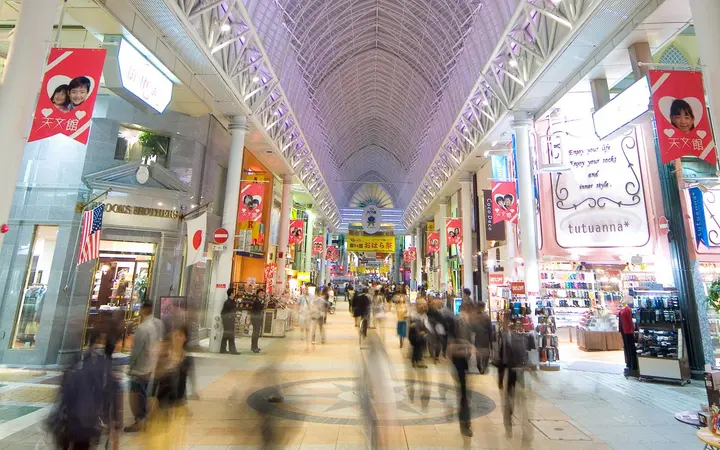
Southern Kyushu's main shopping and dining district under covered arcades, good for kurobuta pork, Kagoshima ramen and shirokuma; it is the shuttle's main town stop and close to the Saigo Takamori statue.