Carcass Island, Falkland Islands

Carcass Island is a privately owned island of about 19 km² off the north-west tip of West Falkland, named after HMS Carcass, which called in 1766. More about Carcass Island →

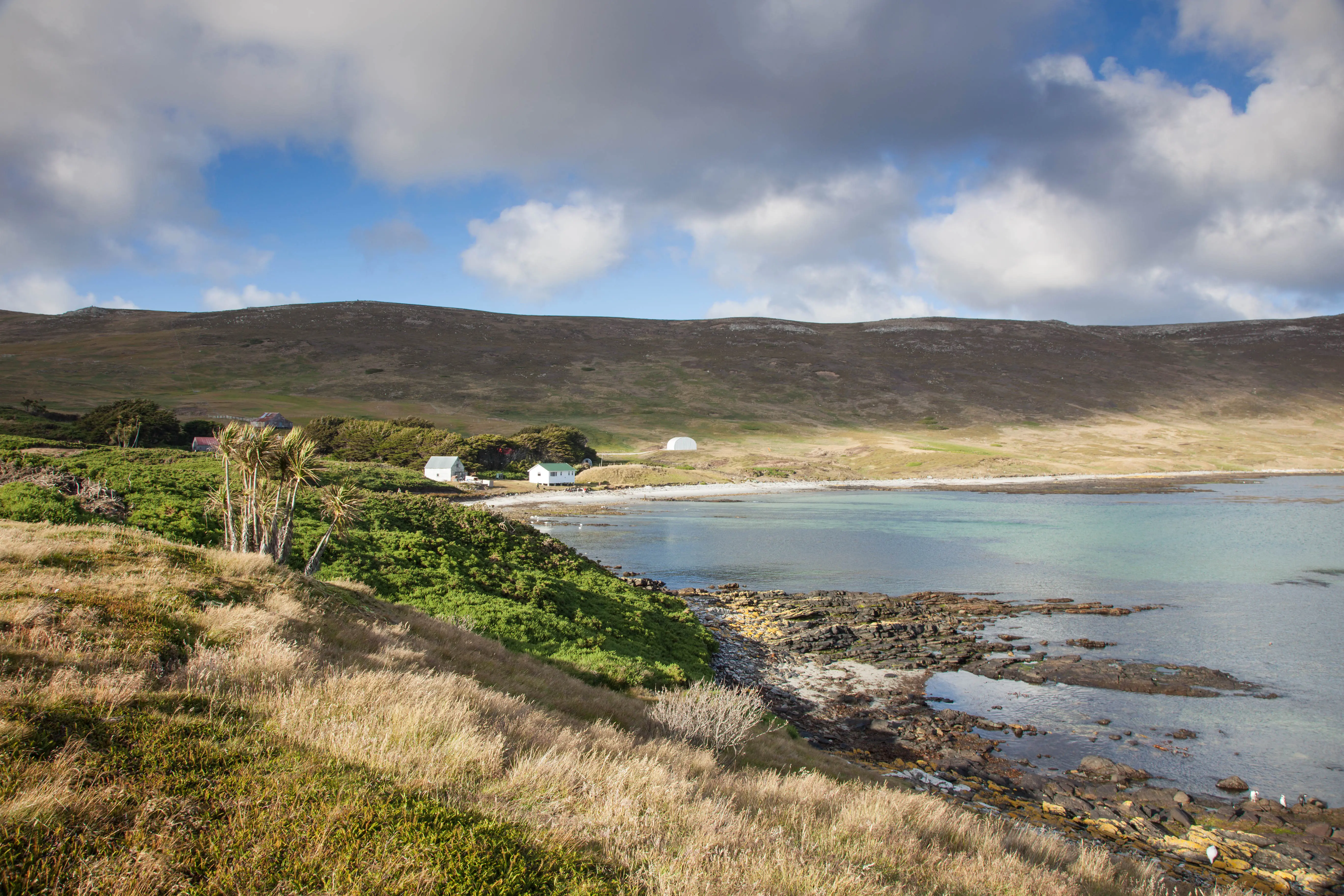
The small settlement on Carcass Island beside a sheltered, turquoise bay, with rolling hills behind
credit

Ship schedule by month

October 2026 · from today · all times local (Falkland Islands Standard Time)

No more ships are scheduled in Carcass Island this month

Try another month.

Cruise Ships in Carcass Island

Today and the next 7 days · all times local (Falkland Islands Standard Time)

Today · Fri 23 OctNo ships
0 people in port
No cruise ships today

Next 7 days

  1. Fri
    23 Oct
    –No ships
    0 ships
  2. Sat
    24 Oct
    –No ships
    0 ships
  3. Sun
    25 Oct
    –No ships
    0 ships
  4. Mon
    26 Oct
    –No ships
    0 ships
  5. Tue
    27 Oct
    –No ships
    0 ships
  6. Wed
    28 Oct
    –No ships
    0 ships
  7. Thu
    29 Oct
    –No ships
    0 ships

Thousands of people in port, guests plus crew. Crowd level compared with a typical Carcass Island day.

Planning a day in Carcass Island?

The crowd calendar shows every ship and how busy the port is, hour by hour, plus the quietest and busiest days for the next 90 days.

See the Carcass Island cruise crowd calendar

Where is the Carcass Island cruise port?

There is no pier or terminal for cruise ships. Expedition ships anchor offshore and passengers go ashore by Zodiac, usually onto Leopard Beach or Dyke Bay at the southern end of the island, chosen on the day according to the weather. Some ships instead make dry landings at the jetty by the settlement in Port Pattison.

From the southern beaches, a marked path along the fences leads to the settlement, about 3–4 km of uphill walking. Landings are supervised by the ship's expedition staff and can be cancelled in bad weather.

Cruise port

Getting to the Carcass Island cruise port

Leopard Beach landing → Carcass Island settlement (Port Pattison)

3–4 km

Passengers landed at Leopard Beach or Dyke Bay can walk to the settlement on a marked path that follows the fence lines; it is a stiff uphill walk with cliff views. The distance of about 3–4 km is approximate as published.

Typical prices, approximate. Fares change with demand, traffic and time of day.

TransportTypical priceJourneyGood to know
Walk (marked path)
Freeper person
Varies
Free. Keep to the path, leave gates as found and avoid penguin burrows.

Typical prices, approximate. Fares change with demand, traffic and time of day.

Driving to the port

There are no airport, road, taxi or public-transport links for cruise passengers; all transfers between ship and shore are by the ship's Zodiacs. Carcass Island is private farmland: keep to marked paths, leave gates as found, stay at least 6 m from wildlife, and clean footwear and clothing of soil and seeds before each landing.

Eating in Carcass Island

There are no cafés, restaurants or shops for cruise visitors. Under the Falkland Islands Food Ashore Policy, no food may be left ashore or fed to wildlife, and all scraps and packaging must go back to the ship.

Where to eat

Carcass Island farmhouse (settlement)

Cruise groups are often hosted here for tea and home-made cakes at the end of the walk, arranged through the expedition operator.

Destination

About Carcass Island

Carcass Island is a privately owned island of about 19 km² off the north-west tip of West Falkland, named after HMS Carcass, which called in 1766. It has been a sheep farm for more than a century, and its owners have kept it free of rats, mice and cats.

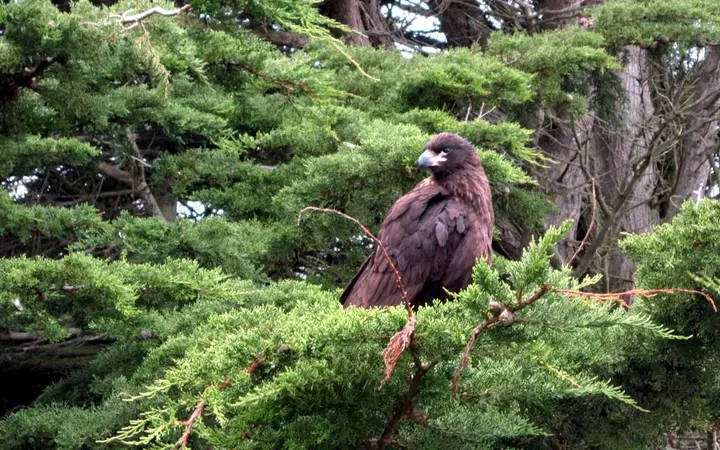
As a result its birdlife is unusually tame and abundant, including the endemic Cobb's wren, tussacbirds, long-tailed meadowlarks and the rare striated caracara, or 'Johnny Rook'. Gentoo and Magellanic penguins breed above the white-sand beaches, elephant seals haul out at the northern end, and the island is recognized as an Important Bird Area.

The small settlement at Port Pattison sits on a sheltered harbor with planted trees and gardens. Carcass is a regular stop on expedition cruises to the Falklands, South Georgia and Antarctica, and visits often end with tea and home-made cakes at the farmhouse.
Climate
Cool, windy maritime climate with small temperature swings: summer (December–February) highs average around 15°C and winters are near freezing. Gales are common, the weather changes quickly, rainfall is low (about 560 mm a year), and UV is strong even when overcast.
Time zone
Falkland Islands Standard Time
Currency
Falkland Islands Pound (FKP)

Things to Do in Carcass Island

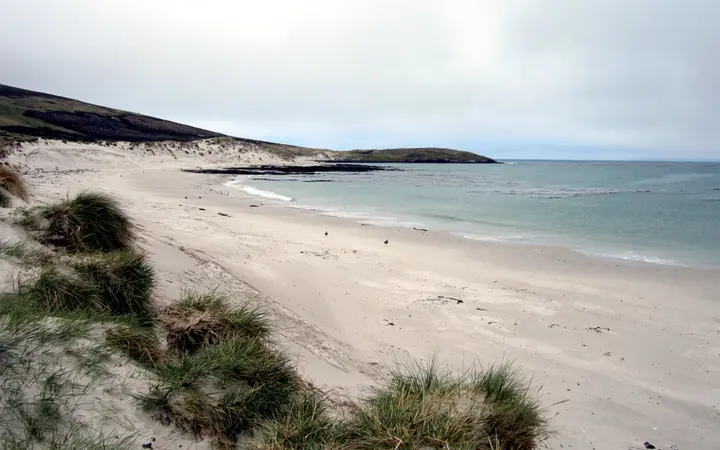
White sand and tussac grass at Leopard Beach on Carcass Island
credit

Penguins at Leopard Beach and Dyke Bay

Gentoo penguins nest in the tussac grass and Magellanic penguins in burrows along the beach edges, alongside Falkland steamer ducks and Magellanic oystercatchers. Magellanics are most visible early and late in the day.

A striated caracara perched in a tree on Carcass Island
credit

Birdwatching on the walk to the settlement

With no rats, mice or cats, songbirds such as the endemic Cobb's wren, tussacbirds, long-tailed meadowlarks and Falkland thrushes are abundant and tame. Striated caracaras often perch on fence posts along the path.

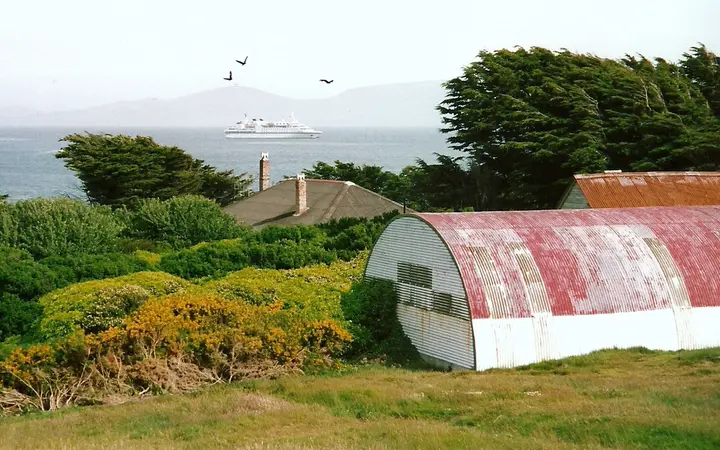
Settlement buildings and trees on Carcass Island, with an expedition cruise ship anchored offshore
credit

Carcass settlement and farmhouse tea

The small farm settlement on a sheltered harbor has trees and gardens that shelter songbirds. Cruise groups are often welcomed at the farmhouse for tea and home-made cakes.

Cruise Ships Visiting Carcass Island

Atlas Ocean Voyages