Basco, Philippines
No cruise ships are scheduled in Basco today, Friday 13 November 2026. The next is Le Soléal on Friday 17 September 2027. Over the next 12 months, 1 call brings about 224 passengers.
Ship schedule
Next 6 calls · all times local (Philippine Standard Time)


Showing all 6 upcoming calls
Cruise Ships in Basco
Today and the next 7 days · all times local (Philippine Standard Time)
Next 7 days
- Fri13 Nov–No ships0 ships
- Sat14 Nov–No ships0 ships
- Sun15 Nov–No ships0 ships
- Mon16 Nov–No ships0 ships
- Tue17 Nov–No ships0 ships
- Wed18 Nov–No ships0 ships
- Thu19 Nov–No ships0 ships
Thousands of people in port, guests plus crew. Crowd level compared with a typical Basco day.
Planning a day in Basco?
The crowd calendar shows every ship and how busy the port is, hour by hour, plus the quietest and busiest days for the next 90 days.
Getting to the Basco cruise port
Santo Domingo de Basco Cathedral (Basco town centre) → Port of Basco (Baluarte Bay pier, tender landing)
0.5 km · 5–10 min by car
The landing pier is a short, flat walk from the cathedral and the centre of Basco.
Typical prices, approximate. Fares change with demand, traffic and time of day.
Typical prices, approximate. Fares change with demand, traffic and time of day.
Driving to the port
Tricycles, including traditional cogon-roofed ones, are the local taxis in Basco, and vans are used for island tours; agree the fare before you ride.
Eating in Basco
Prices in Batanes are in Philippine pesos.
Where to eat
National Road by the port
Harbour Cafe, beside the landing pier, serves Filipino home-style meals with views over Basco port.
Basco town centre
The streets around the cathedral and town hall have small cafes and restaurants, such as Casa Napoli Pizza with brick-oven pizza, and local eateries serving Ivatan dishes.
About Basco
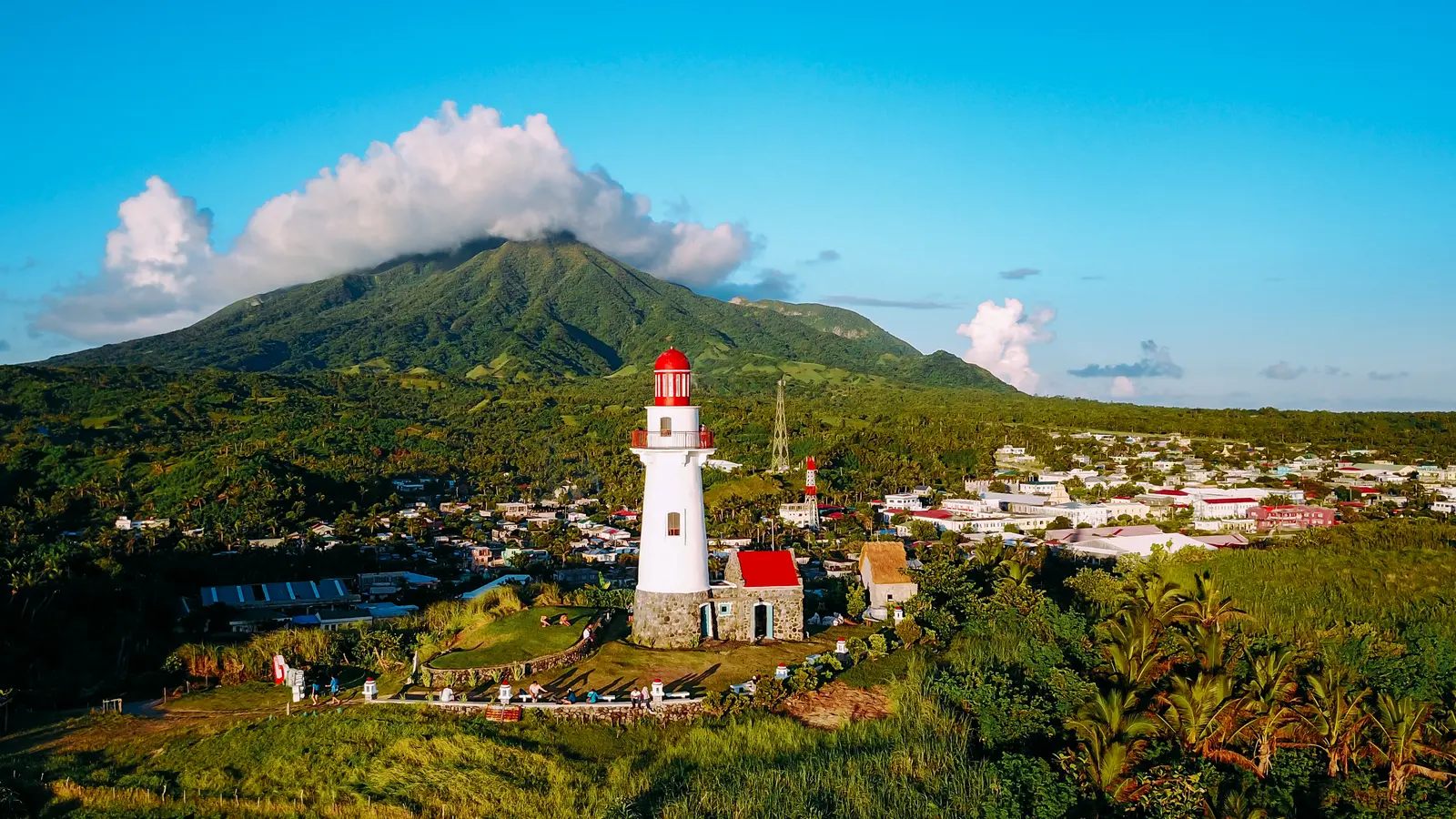
Basco is the capital of Batanes, the far-north province of the Philippines, on the west coast of Batan Island between the South China Sea and the Pacific. The small town sits below Mount Iraya, a dormant volcano, and is surrounded by green rolling hills and sea cliffs. Above the harbour, the Naidi Hills lighthouse looks over the town and Baluarte Bay.
Ivatan culture is the main draw: traditional stone houses with thick walls and cogon-grass roofs, built against typhoons, still stand in villages across Batan and on nearby Sabtang Island. Island tours by van visit coastal viewpoints and the Dipnaysuhuan Japanese tunnel from World War II.
Expedition ships anchor off the town and bring guests ashore by tender.
- Climate
- Warm, humid tropical climate, cooler than most of the Philippines because of its northern position. Long-term averages for the Basco weather station give daily highs of about 24 C in January and December, rising to about 30 C from June to August, with lows of about 18-19 C in winter and about 25 C in summer. About 2,330 mm of rain falls a year on around 150 rainy days. March and April are the driest months (about 55 mm), while August and September are the wettest (about 320-345 mm). Typhoons are most likely from July to October, and the northeast monsoon brings wind and rough seas from November to February. All figures are approximate.
- Time zone
- Philippine Standard Time
- Currency
- Philippine Peso (PHP)