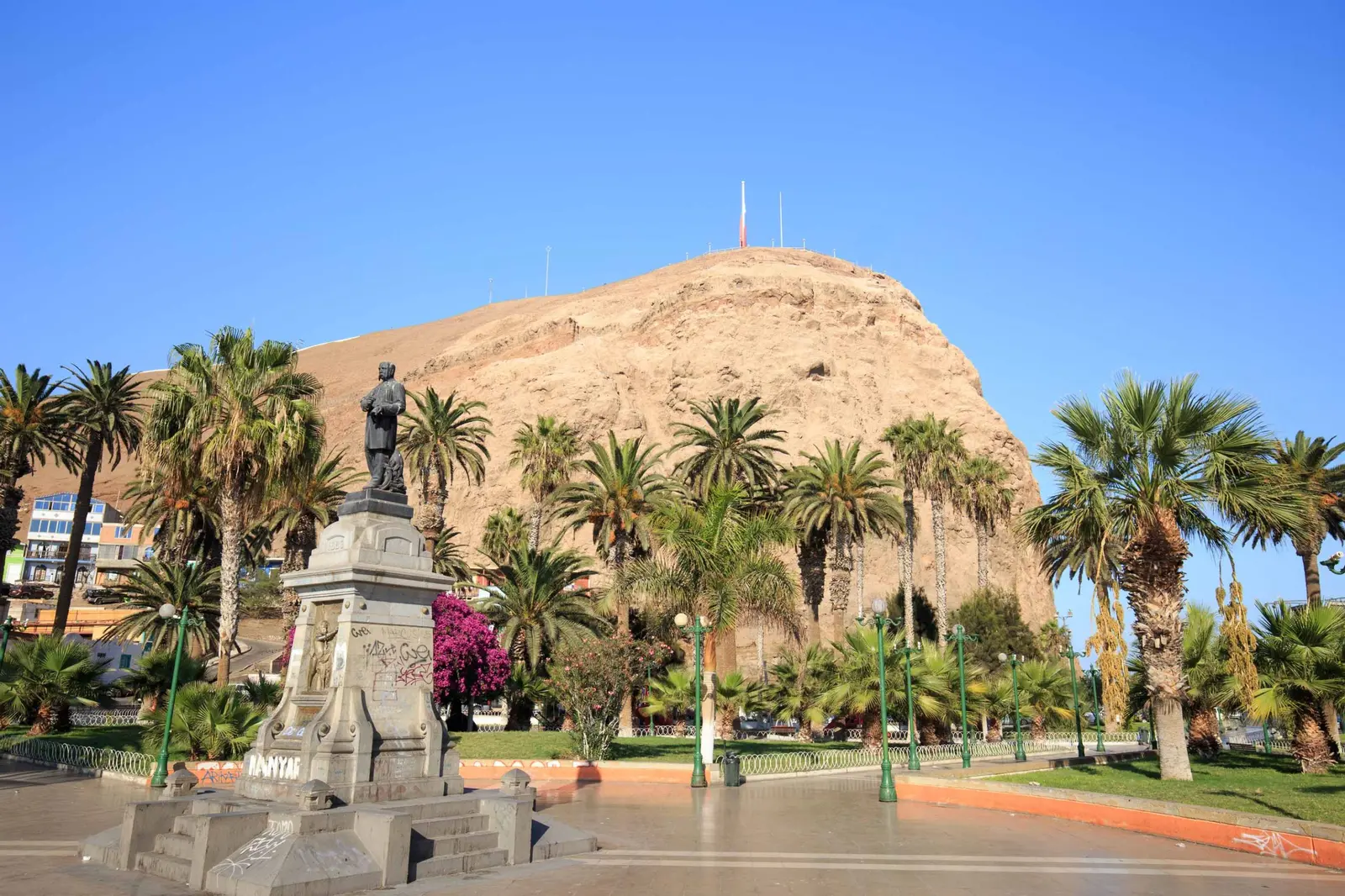
Arica, Chile
No cruise ships are scheduled in Arica today, Friday 13 November 2026. The next is Queen Anne on Friday 5 March 2027. Over the next 12 months, 4 calls bring about 6,500 passengers.
Ship schedule
Next 10 calls · all times local (Chile Time)



Showing all 10 upcoming calls
Cruise Ships in Arica
Today and the next 7 days · all times local (Chile Time)
Next 7 days
- Fri13 Nov–No ships0 ships
- Sat14 Nov–No ships0 ships
- Sun15 Nov–No ships0 ships
- Mon16 Nov–No ships0 ships
- Tue17 Nov–No ships0 ships
- Wed18 Nov–No ships0 ships
- Thu19 Nov–No ships0 ships
Thousands of people in port, guests plus crew. Crowd level compared with a typical Arica day.
Planning a day in Arica?
The crowd calendar shows every ship and how busy the port is, hour by hour, plus the quietest and busiest days for the next 90 days.
Getting to the Arica cruise port
Plaza Colon → Terminal Puerto Arica
0.4 km · ~6 min by car
This small square at the foot of the Morro, next to the historic centre, is just outside the port gate, a walk of about 400 m or 6 minutes; the port itself is a working cargo area with controlled access.
Typical prices, approximate. Fares change with demand, traffic and time of day.
Typical prices, approximate. Fares change with demand, traffic and time of day.
Driving to the port
The port is a working cargo port right beside the city centre, with controlled access to the berths. The main square, the Morro and the historic centre are a short walk from the port gate. Taxis or tours are needed for the beaches north of the centre, the Azapa Valley and the airport.
Eating in Arica
- Coffee per item
- CLP 2500–4000
- Casual lunch per person
- CLP 4000–12000
- Restaurant dinner per person
- CLP 14000–30000
- Soft drink per item
- CLP 1800–2400
Peruvian-style dishes such as ceviche are common on local menus. Prices are in Chilean pesos.
Where to eat
Paseo 21 de Mayo
Pedestrian street in the centre, a few minutes on foot from the port, with cafes and casual restaurants.
About Arica
Arica is Chile's northernmost city, on the desert Pacific coast close to the border with Peru. Known as the City of Eternal Spring, it is mild, sunny and almost rainless all year.
Its landmark is the Morro de Arica, a sheer coastal hill about 130 m high above the centre, scene of a decisive battle of the War of the Pacific and now a national monument with a history museum and wide views. A small museum at the foot of the Morro displays mummies of the Chinchorro culture, among the oldest artificially preserved human remains in the world.
Beaches such as Chinchorro and Las Machas line the coast north of the centre, the green Azapa Valley runs inland, and day trips reach the high Andes of Lauca National Park and Lake Chungara. The port is also an important cargo gateway for goods to and from Bolivia.
- Climate
- Coastal desert climate, mild all year and almost completely dry. At the official weather station at the airport just north of the city, average highs are about 25 to 26 C from January to March and about 18 to 19 C from June to September, with lows of about 20 C in summer and 15 C in winter. Rain is extremely rare, about 2 mm a year in total. Summer (December to March) is the sunniest time; from about May to September there are fewer sunshine hours, with more grey, overcast skies, especially in the mornings.
- Time zone
- Chile Time
- Currency
- Chilean peso (CLP)