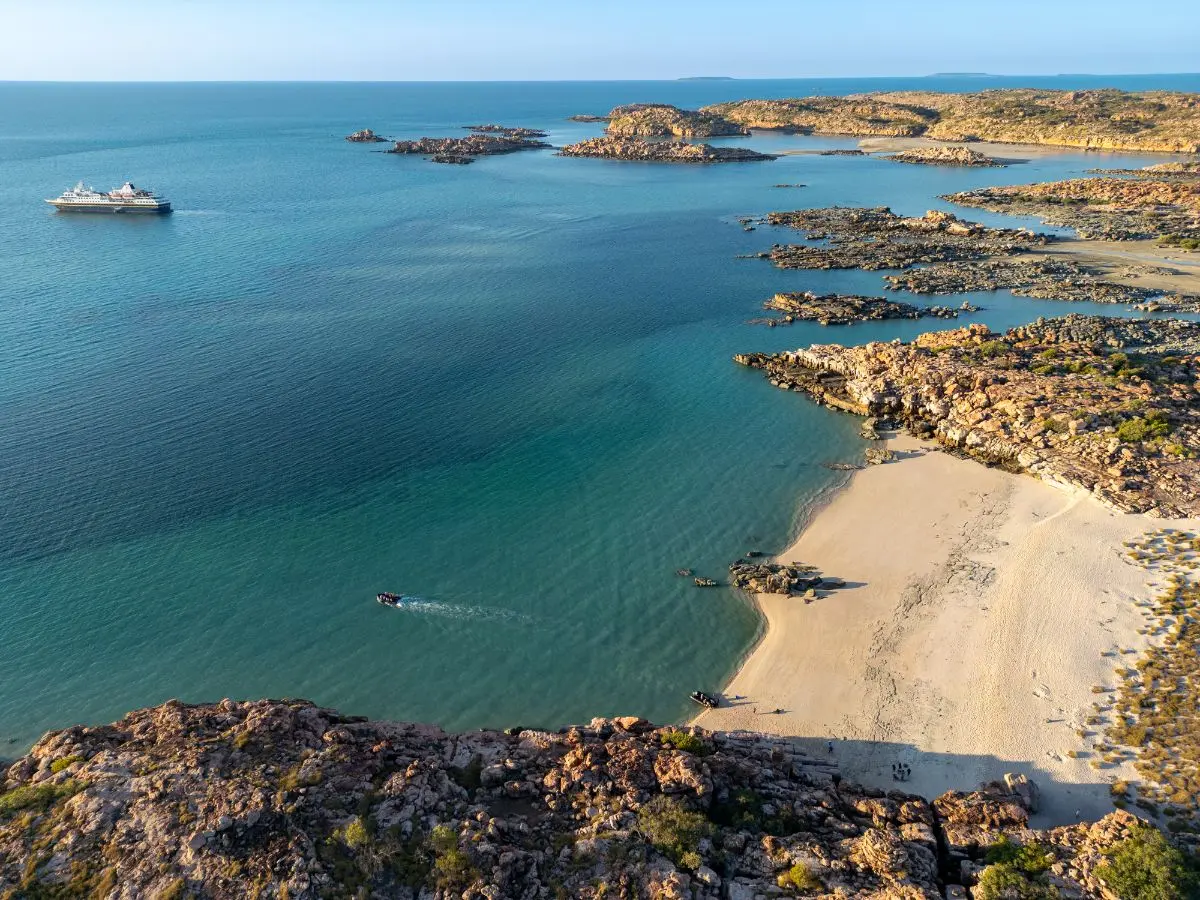
Bigge Island, Australia
Bigge Island, known traditionally as Wuuyuru, is one of the larger islands on the remote Kimberley coast of Western Australia. More about Bigge Island →
Cruise Ships in Bigge Island
Next call · all times local (Australian Western Standard Time)
Showing 1 upcoming call
About Bigge Island
Bigge Island, known traditionally as Wuuyuru, is one of the larger islands on the remote Kimberley coast of Western Australia. It was named by the explorer Phillip Parker King after Commissioner Thomas Bigge.
The uninhabited island is free of introduced predators and has never been reached by cane toads, making it a refuge for the Northern Quoll and the Monjon rock-wallaby, and a nesting site for Flatback Turtles.
Expedition ships anchor offshore and land guests by small boats at Wary Bay. Above the beach, sandstone caves hold Wandjina rock art, including the Father Kaiara figure, and rare contact art showing boats and men with pipes.
- Climate
- Hot tropical monsoon climate with a humid wet season from about December to March and a long, dry and sunny season from about May to October, when expedition cruises operate. Based on long-term averages at an island weather station about 134 km north-east, mean maximums range from about 29 C in July to 33 C in November and mean minimums from about 22 C to 28 C. Rainfall averages about 805 mm a year on around 41 days, mostly from December to March, with about 275 mm in January; June to October are almost dry. All figures are approximate.
- Time zone
- Australian Western Standard Time
- Currency
- Australian dollar (AUD)