
Cruise travel looks effortless today. Bright decks. Calm music. Carefully planned excursions. Yet behind this polished image stands a long history of fear, failure, and reform. Modern cruise safety did not appear by accident. It was shaped, slowly and sometimes painfully, by maritime disasters that forced governments and companies to change their rules.
The sea has always been powerful. Just like old wooden ships, about which one could read stories online, giant cruise ships can tremble before the might of the sea. Sailors were often superstitious, and FictionMe has many books with this common trait. It's no coincidence, and it's not just FictionMe stories and fiction, that the number of shipwrecks in human history clearly exceeds 10,000, and these are only major incidents. But the main question is what conclusions people draw or simply accept everything as fate. Here are examples of disasters that taught people a valuable lesson.
RMS Titanic
The memory of a single night in April 1912 changed how the world thinks about ships. The loss of more than 1,400 lives shocked public opinion and revealed hard truths: floating steel and luxury do not replace basic safety. Out of that wake came a political and technical sea-change — an international effort to set minimum safety standards for passenger vessels that would be enforced beyond national whims.
SOLAS
Law followed grief. The first International Convention for the Safety of Life at Sea codified rules on lifeboats, watchkeeping and route notifications; later versions updated ship construction, stability and emergency procedures. In plain terms: ships would no longer be left to the judgment of a single captain or owner when a disaster occurred — states agreed on a baseline. Over the next century SOLAS would be amended repeatedly as technology and hazards evolved; it remains the backbone of modern passenger-ship safety.
The communications revolution and automatic distress systems
Previously, people relied on luck and primitive means of communication. It's easy to see why they often traveled in groups while reading pirate books on the FictionMe app. But the advent of communication has greatly improved the situation.
A wave of change arrived with radio, then satellites. The Global Maritime Distress and Safety System — GMDSS — turned distress calls from a manual, ship-to-ship scramble into an automated, shore-connected network. Ships now carry EPIRBs that ping satellites with precise coordinates, and digital selective calling that alerts coast stations instantly. That means fewer lost hours in rescue coordination; it means survivability improved simply because help can be summoned and located far faster than before.
MS Estonia
Not all lessons came from century-old liners. The 1994 sinking of a large roll-on/roll-off ferry in the Baltic killed 852 people and exposed specific design and operational vulnerabilities: vehicle decks that allow rapid water spread, bow doors that can fail, and stability models that did not capture the ship’s real-time behavior in waves. The industry re-examined watertight integrity, evacuation routes and the engineering of ramps and visors. The tragedy forced regulators and classification societies to tighten rules for ro-ro passenger vessels and for how stability is assessed in the dynamic, messy real world.
Costa Concordia
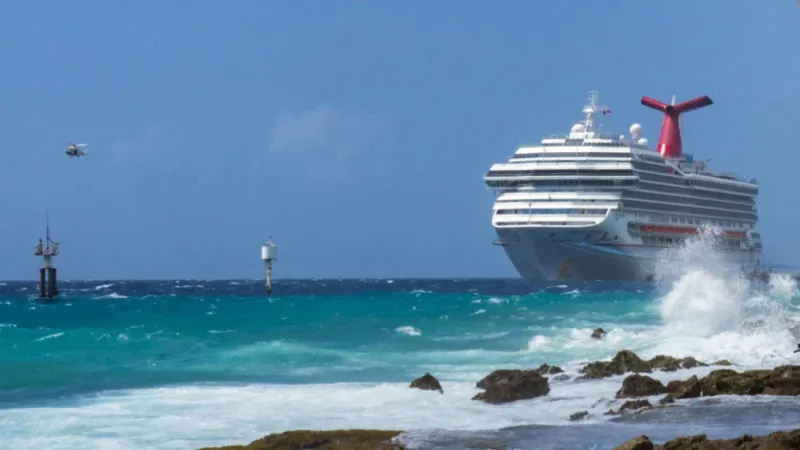
Then came high-profile modern disasters that pierced public confidence and focused attention on human factors and crisis management. When a large cruise ship grounded and partially sank in 2012, the accident report and subsequent inquiries highlighted poor bridge decision-making, deviations from planned routes, unclear emergency leadership, and delays in mustering passengers. The industry response blended design rules with behavioral fixes: more rigorous bridge resource management, stricter adherence to passage plans, and mandatory passenger safety briefings before or immediately after departure. Regulators also accelerated work on “safe return to port” design standards so a damaged ship could, where possible, bring itself to safety rather than depend on a full evacuation at sea.
Cruise Lines International Association
Industry groups and flag/port states both reacted. Within weeks of the 2012 disaster, cruise lines agreed to mandatory pre-departure muster drills for embarking passengers; later SOLAS amendments made such drills the international standard from 1 January 2015. At the same time, regulators moved to embed redundancy in essential systems: duplicated power and steering circuits, improved fire zones, and defined “safe areas” that remain habitable after flooding or fire. In short: ships must be designed and operated so that the vessel itself is as much a life-preserving system as the lifeboats.
Design, redundancy and the “ship-as-lifeboat” idea
Modern rules emphasize redundancy because failures compound quickly at sea. If a single fire or hull breach used to disable a ship, today design standards often require that one casualty does not knock out all propulsion, electrical, or steering capability. That concept — known as “Safe Return to Port” — asks naval architects to plan for realistic worst cases, to separate systems physically, and to provide crew with automated tools or shore support to assess stability and return safely. It’s costly to retrofit older ships, but newbuilds now embed these features by default.
Training, drills and culture: the human side
Engineering is necessary but not sufficient. Training and culture determine whether equipment prevents disaster or simply delays it. Bridge resource management, crew emergency drills, clear command protocols, and passenger communications are all vital. Muster lists, signage, multilingual announcements and routine practice turn panic into an organized response. Regulators now focus on exercises, auditing paperwork, and ensuring that human performance — not only metal and wires — is held to account.
Numbers and perspective: is cruising safer now?
Statistics paint a reassuring picture. Cruising is very safe compared with many forms of travel: in broad analyses the risk of a fatality on a cruise has been estimated to be extremely low — for example, one widely cited calculation put the odds of dying on a cruise in the low millions (about 1 in 6.25 million). At the same time, operational-incident reviews by industry bodies show there are still hundreds of reportable incidents of varying severity industry-wide across a decade; those data drive continuous improvement. In short: absolute risk is low, but the industry treats every incident as a source of lessons.
What this history teaches us — and why it matters today
Each disaster tightened a bolt in the machinery of safety. The Titanic taught us to standardize lifesaving equipment and international oversight. Ro-ro ferry sinkings taught us to respect hidden stability risks and doors that seem small but can doom a ship. The Costa Concordia underlined human judgment, communication and the need for ships that can survive major damage. The cumulative effect is layered protection: better hulls and compartments, faster distress comms, redundant systems, mandatory drills, and more training. Together these layers reduce the chance that a single error or mechanical failure becomes a catastrophe.
Conclusion
Maritime safety has always been reactive: a painful lesson, then a rule. But reaction has given way to anticipation. Rules are stricter, technology is smarter, and culture has shifted toward verification and preparedness. The sea is still unforgiving. Ships will still encounter storms, navigational hazards and human error. But thanks to a century of learning — from the icy Atlantic to the Baltic and the Mediterranean — modern cruise safety is built on memory as much as engineering, and that combination saves lives.