
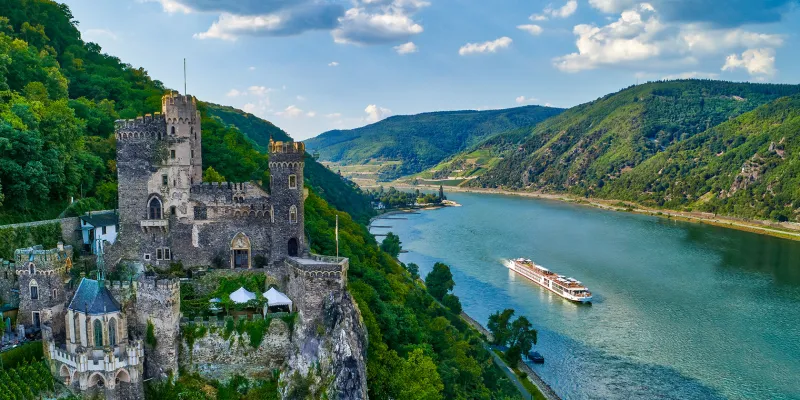
For years, the Rhine river cruising has remained one of the most rewarding holiday experiences. With castles emerging out of hills, vineyards folding into the riverbanks and quaint villages visible in the distance, this is a great choice for those who want to enjoy natural landscapes and some private cruise time.
However, the challenge isn’t in what you see, but how you experience it.
Over the years, cruise passengers have been demanding a better way to experience their cruise holidays where they can step out and enjoy the fresh air. In 2026, there is an emerging trend of river cruise cabins being redesigned around a simple promise: bring the outside closer.
For years, floor-to-ceiling glass, wider sliding doors, and carefully framed river views have remained a standard for modern onboard experience. However, this has also blurred the definition of a “balcony” in the industry.
Today, when you head out for a Rhine River cruise, you can witness a quiet shift that is redefining not just how cabins are redefined, but the very idea of what it means to have a balcony on the water.
Why French Balcony Still Dominates the Rhine Cruising Industry
Today, the French balcony design is an industry standard with no outdoor floor space or extension beyond the cabin. Instead, it features floor-to-ceiling glass windows paired with a protective railing, which maximizes visual access to the river.
This allows the guests to open the glass doors, breathe in the fresh air, and enjoy uninterrupted views, but they remain entirely within the interior space. This design remains widely used because it aligns with the structural reality of river cruising. Pack well so you can enjoy breezy days on deck.
The Rising Trend of True Balcony
While the French balcony still remains an established design standard, there is a gradual shift towards the idea of having a “true balcony”. This design introduces the passengers to a small but tangible outdoor space attached directly to the cabin. With this, passengers can physically step outside and enjoy the limited space.
While this space is just enough for a chair or standing space, it drastically changes the way people experience and interact with nature and the river. While this design is not yet widespread, it is now reserved and used for higher-category suites.
Why the Rhine Leads This Cabin Revolution
The Rhine has remained one of Europe’s most important river cruising corridors, packed with dense scenic routes, high demand and short cruise durations. This combination of factors makes Rhine River cruising a perfect playground for experimenting with new onboard concepts.
Unlike ocean cruising, where ships operate in open waters, Rhine River cruising is limited because of the geography, placing strict limits on vessel dimensions. However, with a good demand, cruise companies are willing to go ahead with ideas that can bring them more business.
The Future of Cruise Cabins
Looking ahead to 2026 and beyond, Rhine River cruise cabins are expected to evolve, but not the way you imagine. French balconies are still going to be the foundation of most standard cabins because of their efficiency and compatibility with modern river ship architecture. However, the demand for true balconies will make an impact and will be positioned in a premium category, allowing passengers to step out and make the most of their river cruise experience.